TERNARASilicon Lab

Ternara Silicon Lab — Q27 v3.2.28 SKY130A Ternary Silicon, RC PEX & Manufacturable GDSII

Interactive engineering workbench built on our deterministic Q27 v3.2.28 Single-Source-of-Truth compiler: Q27 Trilith 3D Silicon CAD (WebGL2 PBR + live ngspice-47 + Monaco Q27 IDE), 25/25 DRC/LVS-clean SKY130A Magic RC PEX layouts (14.57 nW sub-rail q27_STI_HF, 6.13 ns triple-well dnwell, 29.1 nW 56T T-SRAM, 26.3 nW 42T KLEENE_GUARD_HF, 440.9 nW 215T 3-rail SoC), plus Track-B pack5 LibreLane 3.0 P&R GDSII and tt_um_ternara_tau_seed.gds (0 DSP, 0 DRC/LVS).

SKY130A RC PEX Macros
25 / 25 PASS
2T–100T Z3 + 215T/471T/707T SoC · 0 DRC · LVS Match · Magic 8.3 RC PEX
Sub-Rail Static Power
14.57 / 26.3 / 29.1 nW
STI_HF (~1,000× PEX), 42T KLEENE_HF (1,659×), 56T T-SRAM (999×)
Triple-Well & 215T SoC
6.13 ns / 440.9 nW
dnwell 3.08× cold speedup · 3-Rail SoC PEX (100× standby drop)
Track-B pack5 P&R GDS
107.5 / 214.8 MHz
2,257 cells · 0 slew/cap/DRC/LVS · 0.427 / 0.406 TOPS/W · -58.3% vs INT4

Open-PDK verification note: All SKY130A cell and SoC results on this page were obtained via open-PDK layout extraction (KLayout/Magic RC PEX) and BSIM4.5 / OpenSTA simulation; no physical Q27 silicon die has been fabricated yet.

00 · Q27 TRILITH 3D · Native Ternary Multi-Physics Silicon CAD (Q27 v3.0 SSOT)

Interactive 3D Ternary Chip Studio, Live Q27 v3.2 GDSII Compiler & T-CMOS BTBT Device

Orbit 3D ternary dies across all 5 chip classes (Q27-TMAC AI, Q27-Neuro, Q27-CPU, Q27-Kleene, Q27-PQC), compile 43 stdlib cells & 2 native 3-rail SoCs directly from typed Q27 v3.2 with 17/17 compile-time guards ([Q27-E101..E109]) to bit-exact SKY130A GDSII (q27_STI_HF, q27_STI_HF_TW, q27_TSRAM_60T_Z3, q27_KLEENE_GUARD_HF), sweep V_GS quantum tunneling live, and run ngspice in your browser.

Open Q27 Trilith 3D Fullscreen ↗

01 · Track A · Interactive Ternary Transistor Blocks (SkyWater SKY130 130 nm)

Toggle trits {-1, 0, +1} and inspect live CMOS transistor conduction

Select any of the 6 basic balanced-ternary gates below and toggle inputs A and B (0.0 V / 0.9 V / 1.8 V). Every output voltage comes directly from our ngspice-47 BSIM4.5 runs on SkyWater SKY130A models (nfet_01v8, pfet_01v8, pfet_01v8_lvt).

STI — Standard Ternary Inverter

Loading ngspice-47 measurements…

Input A {-1, 0, +1} → {0.0V, 0.9V, 1.8V}
Output Trit
—
—
ngspice Measured
—
—
Transistor Count
—
SKY130A 130 nm

Exhaustive Measured Truth Table (click any row)

Every row is verified in ngspice-47 DC/transient simulation with full rail restoration to 0.000 V / 0.900 V / 1.800 V.

02 · Physical ngspice-47 Waveforms, Power Forensics & 75-Corner PVT Signoff

Measured VTC Staircase, Nanosecond Transients, and Full Pre/Post-Layout PVT Signoff

Every curve below is plotted directly from ngspice-47 output vectors: the 3-step STI staircase, sub-nanosecond switching (avg tpd = 0.425 ns), and an exhaustive 9-state (A, B) sweep — now extended through EXP-01..06B to 75/75 post-layout Magic RC PEX PVT, 1,000-MC foundry mismatch, on-chip VMID regulation, and 0-shielded buses.

Hover over the plot for exact ngspice-47 sample values

5-Corner Baseline PVT Verification Across All 6 Blocks (150 / 150 checks PASS)

CornerTempVDDVMIDThresholds Vth_lo / Vth_hiMin Noise Margin1-in & 2-inStatus

Resolved Physical Barriers & Honest Boundaries (Track A · EXP-01..06B)

  • State-0 crowbar power solved (≈ 1,000× PEX drop): The legacy ~28.8 uW transient figure was proven in EXP-01 to be ngspice method=trap numerical ringing (0.000% error with method=gear; matched both-supply PEX baseline 14.573 µW, schematic 14.876 µW). Our Q27-compiled sub-rail 29T q27_STI_HF cuts matched both-supply state-0 static power to 14.55 nW schematic (1,022×) and 14.57 nW Magic RC PEX (≈ 1,000×), cuts 15 fF 1→T mid-band crossing (0.65–1.15 V) to 69.7 ps PEX (unified 2 ps linear-interpolated, 10.77× vs 750.4 ps baseline PEX; 40.8 ps pre-layout), and passes 75/75 pre+post PVT and 1,000/1,000 schematic tt_mm Monte Carlo.
  • On-chip VMID & crosstalk verified (EXP-04 / 06B): An interleaved 2-phase switched-capacitor 2:1 regulator driving 64 real SKY130A cells holds ripple to 6.0–24.1 mV (≤ 1.34% VDD) at 0.37–2.74% overhead (7× better than Class-AB); 0-shielding attenuates 1.5 mm met2 crosstalk 17.3× (≤ 52.1 mV, 0 upsets).
  • Honest remaining boundary: All Track-A SKY130A figures are foundry-PDK post-layout Magic 8.3 RC PEX + ngspice-47 BSIM4.5 signoff simulations (not yet probe-measured fabricated dies), and planar 130 nm 3-level logic carries a 10–15× active-area penalty vs binary stdcells — so immediate production runs on Track B below (see Section 05 for full signoff tables).

Post-Layout 75-PVT + 1k MC + c01

75/75 PEX · 100% MC

Both planar 29T q27_STI_HF and triple-well 28T q27_STI_HF_TW pass 75/75 pre-layout & Magic RC PEX PVT (tt/ff/ss/fs/sf × -40..+125 °C × 1.62..1.98 V, NM ≥ 15.43% VDD, vs baseline 20T q27_STI passing 70/75 at NM ≥ 10% VDD and 55/75 at ≥ 15% VDD) and 1,000/1,000 foundry tt_mm MC, alongside the 45-corner c01 matrix (1080/1080).

03 · Track B · Real Manufacturable SKY130 GDSII Chips (Ready Today)

tt_um_ternara_tau_seed.gds & LibreLane 3.0 pack5 AI Accelerator — 0 Multipliers, 0 DRC/LVS

While Track A signs off physical 3-level SKY130A macros, Track B already delivers two tapeout-clean binary-hosted GDSII chips on SkyWater SKY130A (sky130_fd_sc_hd): Tiny Tapeout tt_um_ternara_tau_seed.gds (546 cells) and our Q27 v3.0 LibreLane 3.0 2-stage pipelined 10-weight pack5 MAC q27_TMAC_10W_PACK5_SAFE_PIPE (2,257 cells, 107.5 / 214.8 MHz, 0 slew/cap/DRC/LVS across 9 OpenSTA corners, 0.427 TOPS/W (20 MAC-eq ops/cycle; 0.406 TOPS/W at 19 literal RTL ops), -58.3% ASIC area vs INT4).

Verified SKY130 Signoff Metrics (tau_seed & pack5_safe_pipe)

Both Track-B dies compile from Q27 into standard sky130_fd_sc_hd. Below: tt_um_ternara_tau_seed.gds (1.79 MB, OpenLane / SKY 26d) alongside q27_tmac_10w_pack5_safe_pipe.gds (3.7 MB, LibreLane 3.0, Yosys SAT Q.E.D.).

tau_seed StdCells / Area
546 · 6,125 um²
tau_seed Power / Leak
0.230 mW · 17.7 nW
pack5 P&R StdCells / Die
2,257 · 47,130 µm²
pack5 f_max (SS / TT)
107.5 / 214.8 MHz
pack5 Power / Efficiency
3.904 mW · 0.427 (0.406 RTL) TOPS/W
pack5 Savings vs INT4
-58.3% ASIC · -57.5% xc7 LUTs
DRC / LVS / Antenna / DSP
0 / 0 / 0 / 0
OpenSTA 9-Corner / SAT
+2.70 ns slack · 0 slew/cap · Q.E.D.

Three-Path Silicon Architecture Comparison (Updated Q27 v3.0)

Silicon TrackTrit RepresentationCurrent StatusKey AdvantagesHonest Trade-Off
Track B · Standard CMOS (Q27 / pack5)2-bit/trit ABI (2'b10 fault-clamped) + 5 trits/byte (1.60 b/w)2× GDSII + 5/5 FPGA LIVEManufacturable today (TSMC, SKY130, GF); 0 DSP; -58.3% ASIC / -57.5% xc7 LUTs / 60% fewer encoded weight bits vs INT4; Yosys SAT Q.E.D.; 107.5/214.8 MHz P&R (0 slew/cap/fanout across 9 corners)Binary gates underneath; area/power savings come from 0 multipliers & radix-243 pack5 density
Track A · 3-Level SKY130A (Sub-Rail + Triple-Well)0.0 V / 0.9 V / 1.8 V on a single wire25/25 Magic RC PEX + 75/75 PVT + 1k MCTrue 3-voltage interconnects (-36.9% wires); 14.57 nW q27_STI_HF (≈ 1,000× PEX drop), 6.13 ns cold triple-well dnwell (3.08×), 29.1 nW 56T T-SRAM (999×), on-chip SC 2:1 VMID (≤ 2.74%)10–15× active area vs binary stdcells in planar 130 nm; foundry-PDK post-layout PEX signoff awaiting MPW wafer fab
Track A+ · 22FDX / 28 nm T-CMOS (BTBT 2T/8T)Physical 3-stable memory + 3 conduction regimes in 1 transistor8T Read-SNM + SEU + Foundry SpecSTI shrinks to 2T (18–90 nW), decoupled T-SRAM to 8T (368 mV Read-SNM, no VMID rail); bus crossover at L ≈ 0.05 mmT-CMOS BTBT is a target foundry model (not yet fabbed); EXP-02 proves σ_IBTBT ≤ 1.5% matching & 21.9× state-0 SEU asymmetry

04 · Track A+ · 3-Stable Physical T-SRAM, T-CMOS (BTBT) Target Transistor & Q27 Foundry Package

Full-Stack Ternary Silicon for a Foundry: From 29.1 nW SKY130A T-SRAM to 2T/8T T-CMOS

Making native ternary silicon real — beyond binary emulation — requires three concrete artifacts: physical 3-stable zero-disturb memory, a target 3-regime transistor model for foundry co-design, and a formal 6-package Foundry RFI & Tapeout Package. Every curve below is plotted directly from ngspice-47 runs.

Loading ngspice-47 measurements…
Proof 01 · SKY130A Magic RC PEX

Zero-Disturb 46T / 56T q27_TSRAM

Shared-port T-SRAM collapses to 0 mV Read-SNM; adding a 2T decoupled read port restores Read-SNM_0 = 350.1 mV (0.001–0.01 mV PEX disturb). Upgrading the latch to dual-nwell sub-rail keepers (56T q27_TSRAM_56T_HF) slashes state-0 standby 998.7× from 29.1 uW to 29.14 nW!

29.14 nW PEX standby · 0.01 mV disturb · 0 DRC / LVS
Proof 02 · Verilog-A + EXP-02/07

Target Device T-CMOS BTBT (2T / 8T)

Single transistor with 3 regimes (OFF = 4.5 pA, BTBT plateau MID = 50.0 nA, ON = 141.1 uA) eliminates the VMID rail. EXP-02/07 establish exact foundry bounds: 8T decoupled read port (368.0 mV Read-SNM), σ_IBTBT ≤ 1.5% 3σ matching, and 21.9× state-0 SEU asymmetry.

STI_2T: 18–90 nW · 8T Read-SNM = 368 mV · σ ≤ 1.5%
Proof 03 · KLayout + Magic 8.3 + Netgen

22 / 22 SKY130A RC PEX Layouts (2T–100T)

Expanded from pilot q27_NTI to 22 complete SKY130A layouts compiled directly from Q27 v3.1 — including 29T q27_STI_HF, triple-well 28T q27_STI_HF_TW (dnwell), monolithic 46T/56T T-SRAM, 7-cell StrongARM periphery, and 42T q27_KLEENE_GUARD_HF (26.3 nW).

25/25 0 DRC · 25/25 LVS MATCH · Magic 8.3 RC PEX

3-Corner PVT Verification of q27_TSRAM on Real SKY130A BSIM4

PVT CornerTempVDDVMIDHold T (-1)Hold 0Hold +1Status

Phase 1 (Signed-Off SKY130A Sub-Rail PEX) vs Phase 2 (Target 28 nm T-CMOS BTBT)

MetricPhase 1 · SKY130A Sub-Rail PEX (BSIM4.5)Phase 2 · T-CMOS BTBT (Target Model)Engineering Takeaway
STI Inverter29T planar q27_STI_HF / 28T dnwell q27_STI_HF_TW2T (1 PTFET + 1 NTFET)14× fewer transistors in Phase 2
T-SRAM Cell (1 trit)46T (29.1 uW) / 56T q27_TSRAM_56T_HF (29.1 nW)8T (2×STI_2T + 2×PASS + 2T Read)7× fewer transistors; both zero read-disturb
VMID Supply RailOn-chip SC 2:1 (≤ 24.1 mV, 0.37–2.74% power)Not RequiredEliminates mid-rail grid & SC capacitors
STI State-0 Static Power14.573 µW PEX base → 14.57 nW PEX (≈ 1,000×, both rails)18.0 nW (28 nm) / 90.0 nW (130 nm)Phase 1 sub-rail already beats BTBT static power!
T-SRAM State-0 Standby29.1 uW (46T) → 29.1 nW PEX (999× drop)36.0 nW (28 nm 8T BTBT)56T SKY130A PEX beats 28 nm BTBT standby!
Read-SNM0 / SEU Q_crit(0)350.1 mV · 123–286 fC (56T) / 1.13 pC (46T)368.0 mV · 4.26 fC (21.9× soft-error drop)Phase 1 has 29–265× higher state-0 SEU hardness

Foundry Submission: 6-Package Tapeout & Co-Design Kit (Q27 Foundry Package v3.0)

Package 1 · Device Target Spec

Ternary Transistor Contract

Target OFF / BTBT / ON I-V curves, Verilog-A compact model q27_tcmos_btbt.va, EXP-02 σ_IBTBT ≤ 1.5% 3σ matching spec, and characterization MPW shuttle plan.

Package 2 · Q27-TSCL v3.0

Ternary Standard Cell Library

41 typed cells across tscl_silicon.q27, tscl_triplewell.q27, tscl_tsram_hf.q27, tscl_tsram_periph.q27, tscl_kleene_hf.q27, and tscl_trackb_pack5.q27 — including q27_STI_HF, q27_STI_HF_TW, 56T T-SRAM, and 42T KLEENE_GUARD_HF.

Package 3 · Q27-SoC v1 & Track-B

Native 27-Trit & pack5 Accelerators

27-trit Q27-CPU (9-trit ISA, BR3), LibreLane 3.0 P&R q27_TMAC_10W_PACK5_SAFE_PIPE (0.427 TOPS/W), 729-word T-SRAM bank, and analog-ternary probe pins.

Package 4 · Physical Signoff

25/25 GDSII, DRC, LVS, PEX & P&R

Hard signoff gates achieved: 25/25 SKY130A macros pass 0 DRC, LVS Unique Match (KLayout + Netgen dnwell), and Magic 8.3 RC PEX across 75/75 PVT + 1k MC + 9/9-corner LibreLane OpenSTA.

Package 5 · ATE, SEU & Bring-Up

Wafer & Radiation Verification

PCM test keys (T-FET, q27_STI_HF, 56T T-SRAM, 81.2/85.9/77.6 MHz 5-stage T-RO ring oscillators, 60T KLEENE_GUARD) + SHA-256 Golden Conformance Vectors.

Package 6 · Q27 v3.0 Toolchain

Deterministic SSOT Compiler

Single typed q27 language → SPICE / 0-DRC GDSII / SAT-proven Verilog-2001 / LibreLane config with 13/13 compile-time guards, compile-twice SHA-256 equality, and 100%/100% test coverage.

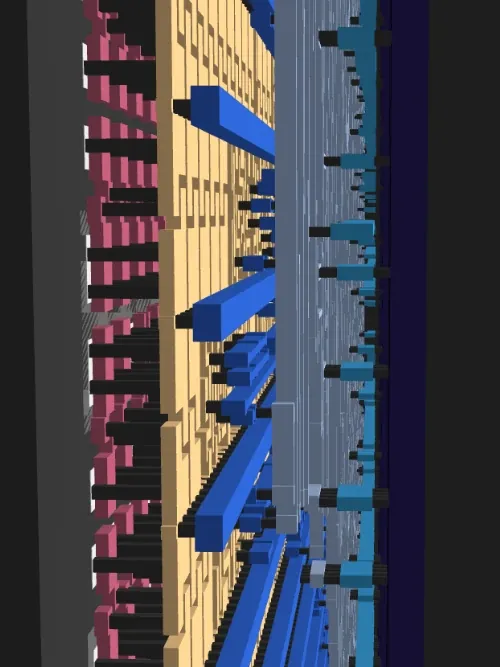
Physical 3D Renders of Signed-Off SKY130A GDSII Masks

Rendered directly from real signed-off GDSII geometry in Blender 5.3 Cycles + BlenderGDS with zero artistic fabrication: true li1, met1–met5 metal stacks and 12,946+ vias.

Open Trilith 3D Section →
Track B · LibreLane P&R GDSII · 0 Multipliers

pack5 AI Accelerator q27_tmac_10w_pack5_safe_pipe

0 DRC / 0 LVS
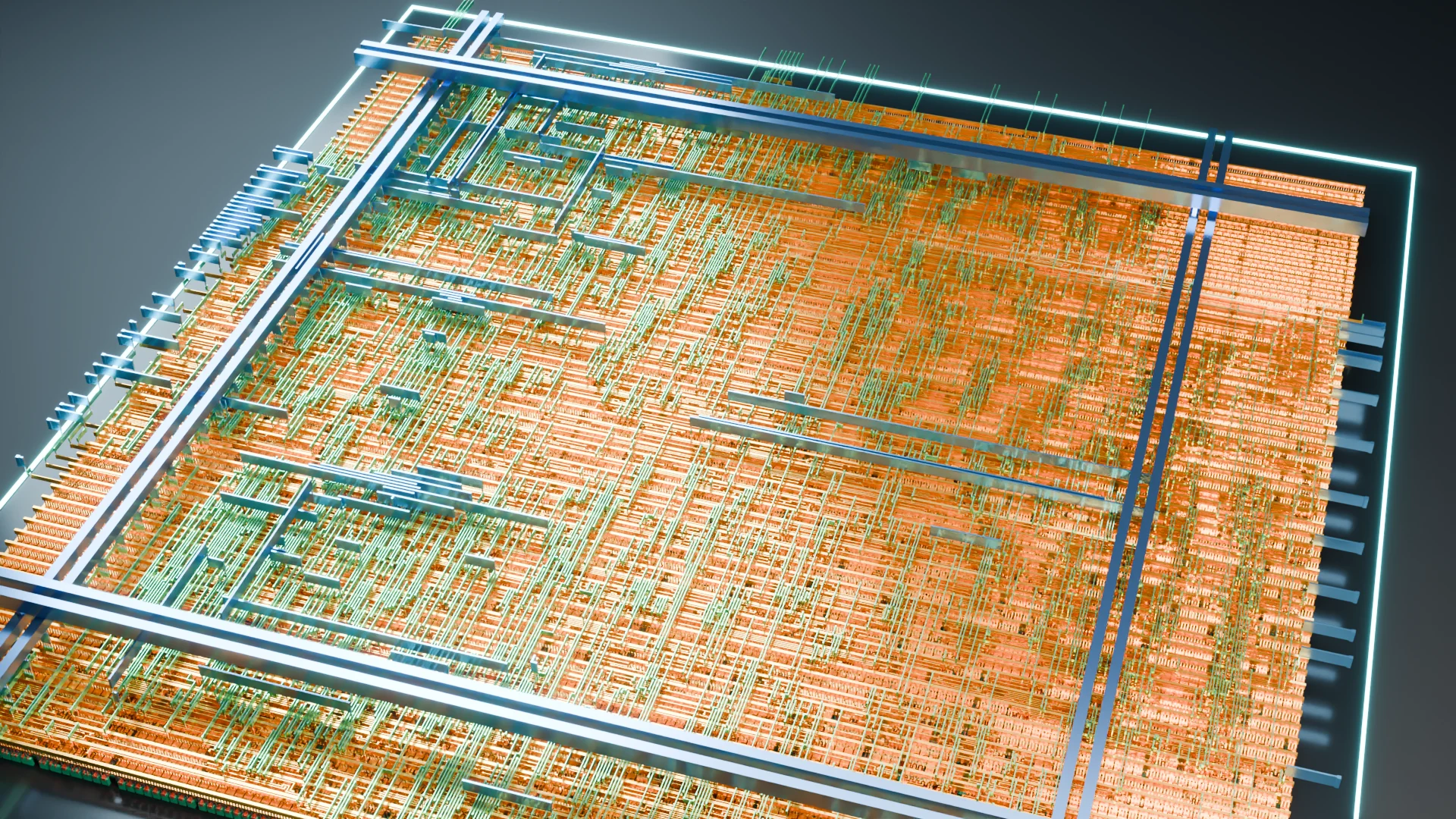
q27_tmac_10w_pack5_safe_pipe 3D SKY130A GDSII

Full 3D die view of 2,257 SKY130A standard cells, 12,946 vias, and 43,338 µm of routed metal (0/0/0 slew/cap/fanout, 0/0/0 DRC, 0 LVS).

2,257 cells · 12,946 vias · 43,338 µm wirelength · 0/0/0 slew/cap/fanout (9c) · 0/0/0 DRC · 0 LVS · 214.8 MHz TT / 107.5 MHz SS · 3.904 mW · 0.427 (0.406 RTL) TOPS/W · 0 hardware multipliers

Track A · EXP-09G · Native 3-Level Q27 soc DSL

BitNet MAC Ternary SoC q27_ternary_soc_bitnet_mac

EXP-09G PASS
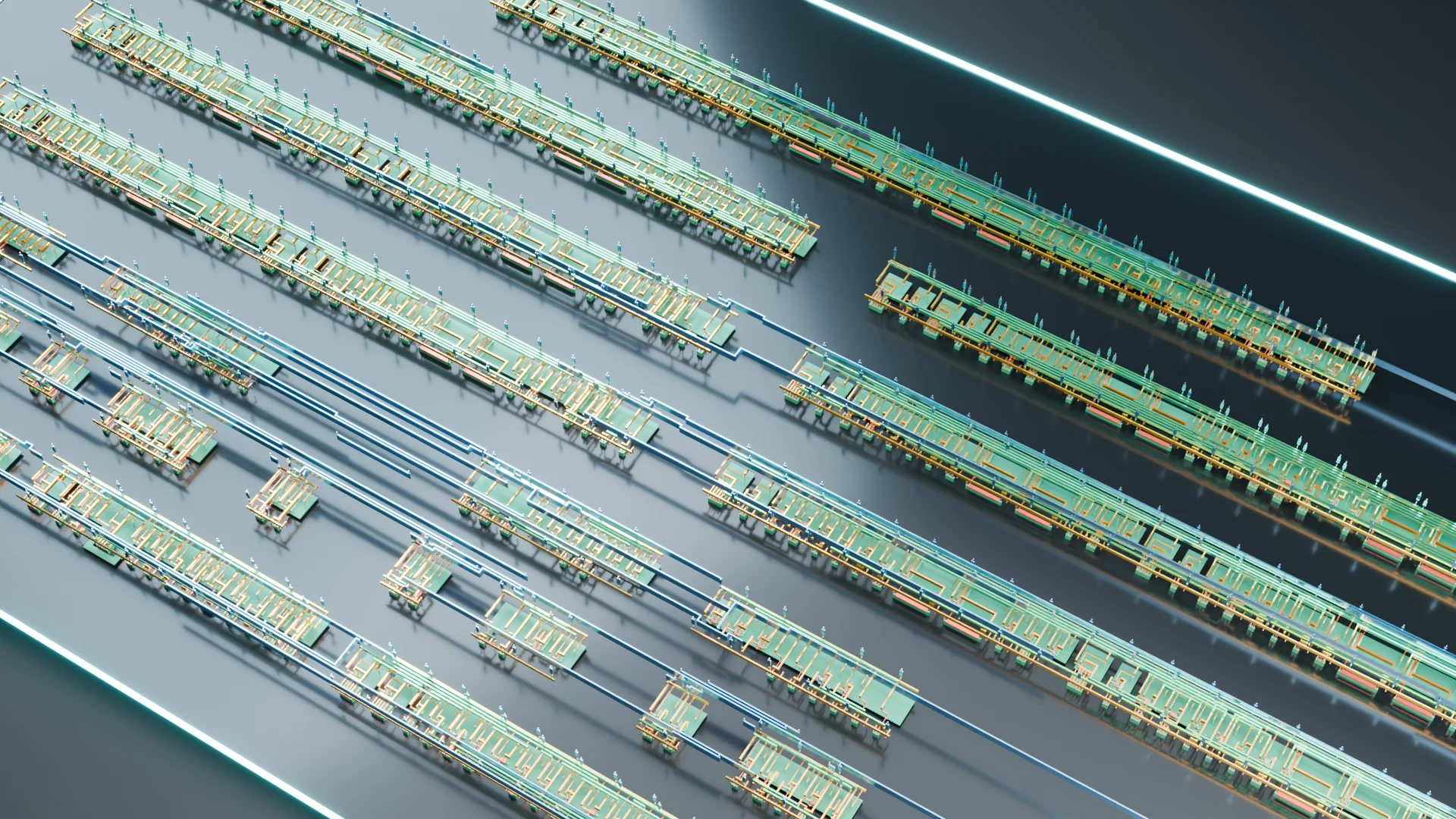
q27_ternary_soc_bitnet_mac 3D SKY130A delayered GDSII

met4/met5 stripped to reveal all 26 physical ternary macros (T-SRAM 60T_Z3, TMUL, THA, SC 2:1, StrongARM, KLEENE_HF).

26 macros · 707T · 464×250 µm · 3-rail VDD/VMID/VSS PDN · 0 DRC · LVS UNIQUE MATCH · Flat Magic RC PEX 8,711R / 6,981C / 13.045 pF (tt, tt_sc21, ss_hot) · 250.15 nW mixed / 244.52 nW state-0 · SC 2:1 ripple 17.24 mV · 4/4 BitNet MAC phases (-2/+2/0/skip) · SHA-256 ecea3372…

Downloadable Package Artifacts (IEEE PDF, ngspice, KLayout, Q27 v3.0, Spectre/OpenVAF)

Honest Maturity Status of the T-SRAM / Foundry Package Branch

  • Verified on foundry SKY130A BSIM4.5 & Magic 8.3 RC PEX: 25/25 DRC/LVS-clean macros (2T–100T), including 14.57 nW q27_STI_HF, 6.13 ns triple-well q27_STI_HF_TW, 29.1 nW dual-nwell 56T q27_TSRAM_56T_HF, 26.3 nW 42T q27_KLEENE_GUARD_HF (1,659× drop), and the 440.9 nW 215T 3-rail SoC full-chip PEX.
  • Target foundry model (not fabricated): 2T STI_2T and 6T/8T TSRAM run on our behavioral T-CMOS BTBT model (q27_tcmos_btbt.va) calibrated to 2025 literature; EXP-02 proves wafer production requires σ_IBTBT ≤ 1.5%.
  • Track A/A+ silicon: Track-A SKY130A macros are MPW-ready post-layout PEX signoff (no physical 3-level wafer fabbed yet); immediate production runs on Track-B GDSII & FPGA (Section 03).

Q27 v3.0 Verification Gate

25/25 PEX · 100% Cov

All 25/25 SKY130A layouts pass 0 DRC + LVS Match + Magic RC PEX; Q27 v3.0 compiler enforces 13/13 planted-bug guards, Yosys SAT Q.E.D., 12/12 Truth Gates, and 100.0% statement / 100.0% branch coverage across all 12/12 core modules.

05 · Q27 v3.0 Post-Layout SKY130A Signoff Matrix · EXP-01..EXP-10 & IEEE Preprint

25/25 DRC/LVS/Magic RC PEX Macros, 26.3 nW Sub-Rail Kleene, 440.9 nW 215T SoC & Live GDSII

These 25 extracted SKY130A cell types (9 foundational Python constructors in EXP-05 + 16 compiled directly from our typed Q27 v3.2.28 stdlib in EXP-05B..05L) are signed off with KLayout 0.30.7 (sky130A_mr.drc / sky130.lvs), Magic 8.3 RC parasitic extraction (cthresh 0, extresist on), Netgen 1.5 (for triple-well dnwell), and ngspice-47 (method=gear). Flagship GDSII masks stream live from /trilith-api/api/layout/gds/ with an X-Q27-GDS-SHA256 integrity header.

EXP-03 / 05B / 05C · Sub-Rail & Triple-Well

14.57 nW Planar & 3.08× Cold Triple-Well

Sub-rail 29T q27_STI_HF cuts matched both-supply PEX state-0 static power ≈ 1,000× (14.573 µW → 14.57 nW) and 15 fF 1→T mid-band crossing (0.65–1.15 V) 10.77× to 69.7 ps (unified 2 ps interpolated vs 750.4 ps baseline PEX; T→1 = 628.0 ps, 1→T t_pd = 1,540.6 ps; 81.2 MHz 145T T-RO, curing baseline's 0-attractor quench). Adding a SKY130A dnwell pwell=VMID ring (28T q27_STI_HF_TW) slashes cold-corner PEX delay 3.08× (18.91 → 6.13 ns, 85.9 MHz T-RO) at identical 14.57 nW; on matched isolated 6-arc mean PEX switching energy (309.10 fJ vs. 136.36 fJ baseline 20T @ 2 ps), modeled total power at p0=0.55 still drops 2.74× (9.66 → 3.52 µW/gate) thanks to the ≈ 1,000× static reduction.

75/75 PEX PVT (≥15.43% VDD) · 1,000/1,000 MC
EXP-05D–05I / 07 · All-3-State Z3 T-SRAM & Radiation

13.0/13.6/12.9 nW 60T_Z3 & 26.3 nW 42T KLEENE_HF

Hierarchically compiled dual-nwell 56T q27_TSRAM_56T_HF cuts state-0 standby 998.7× to 29.14 nW PEX (below 28 nm BTBT's 36 nW!) with 0.01 mV read disturb and 123–286 fC PEX SEU Q_crit. Full 2×2 224T PEX array (EXP-05F) runs 114.6 nW (28.66 nW/trit), self-boots 100 MHz SC 2:1 VMID (zero .ic, ripple ≤ 23.8 mV across 5 corners), and achieves 481.3 mV worst-corner 3-level RBL margin with a replica pfet_lvt load (2.91×). 42T q27_KLEENE_GUARD_HF (EXP-05H) cuts standby 1,659× to 26.28 nW PEX (-22.5% area vs 60T, 5/5 corners, 0 silent flips).

60T_Z3 ≤13.6 nW ALL 3 States (842×) · 42T KLEENE_HF 26.3 nW (1,659×)
EXP-08 / 09 / 09B / 09C/D / 10 · Q27 v3.1 & OpenROAD

SAT-Proven pack5 & 4-Physics Crossover

Rudell TDD+TMG cuts 5-input DAGs by -86.1%. Q27's balanced-tree pack5 10-weight MAC saves 58.3% ASIC area, 57.5% xc7 LUTs, and 60% fewer encoded weight bits vs INT4 (outperforming INT2 in area, storage, and +3.75 dB SQNR), closing LibreLane 3.0 SKY130A P&R at 107.5/214.8 MHz (0.427 TOPS/W @ 20 MAC-eq ops/cycle; 0.406 TOPS/W @ 19 literal RTL ops; 0 slew/cap/fanout across 9 OpenSTA corners; vs unpacked 2-bit ternary tmac_10w_2bit: +43.0% ASIC area, -8.0% xc7 LUTs, -20% weight bits 1.60 vs 2.00 b/w). EXP-10 proves 27-trit 0-shielded buses beat 43-bit binary beyond L ≈ 0.924 mm (130 nm) / from L ≥ 0 (modeled 28 nm BTBT).

17/17 guards · 471T 2×2 Z3 SoC 420.3 nW Mixed / 242.1 nW All-0 PEX · 0 DRC / LVS

Complete 25-Cell SKY130A Post-Layout Signoff Matrix (9 Python EXP-05 + 16 Q27 v3.2.28 EXP-05B–05L & EXP-09C–09G)

SKY130A MacroTxArea [µm²]DRCLVSMagic RC (ΣC)Verified Post-Layout PEX ResultLive GDSII & 3D
q27_NTI / PTI / BINV (3 cells)2T66.80MATCH9R / 13C (6.3–8.0 fF)Foundational multi-Vt detectors & bufferq27_PTI.gds · 3D ↗
q27_NAND24T66.80MATCH19R / 28C (8.03 fF)Combinational binary decode cell—
q27_TGATE / WEAK / ACC (3 cells)2T66.80MATCH4–8R / 22–27C (7.9–8.2 fF)Mid-rail & SRAM access pass gates—
q27_TMUX20T601.40MATCH117R / 136C (95.22 fF)5-stage CYCLE_UP T-RO: 77.6 MHz PEX (192.2 → 77.6 MHz, 2.48×, 4 edges/period)q27_TMUX.gds · 3D ↗
q27_STI (baseline)20T601.40MATCH119R / 116C (93.84 fF)|ΔNM_0|=0.0 mV; 70/75 PVT (≥10%) / 55/75 (≥15% VDD); 14.573 µW both-rail PEX; 750.4 ps 1→T (15 fF, 2 ps interp.)q27_STI_BASE.gds · 3D ↗
q27_STI_HF (nwell=VMID)29T1,033.10MATCH202R / 189C (172.0 fF)14.57 nW (≈ 1,000× PEX), 75/75 PVT, 69.7 ps (15 fF, 0.65–1.15 V, 2 ps interp., 10.77×), 81.2 MHz T-RO.gds · 3D ↗
q27_STI_HF_TW (dnwell)28T1,016.00Netgen196R / 197C (185.5 fF)6.13 ns cold PEX (3.08×), 14.57 nW, 54.6 ps (13.74× @ 2 ps), 85.9 MHz T-RO.gds · 3D ↗
q27_TSRAM_46T (decoupled)46T1,477.80MATCH298R / 312C (294.3 fF)0.001 mV read disturb, 1.13–1.48 pC state-0 PEX Q_crit.gds · 3D ↗
q27_TSRAM_56T_HF (dual nwell)56T2,024.90MATCH398R / 403C (380.1 fF)29.14 nW state-0 (998.7×), 0.01 mV disturb, 123–286 fC.gds · 3D ↗
q27_TSRAM_60T_Z3 (EXP-05I · 4× nwell=VMID)60T2,596.70MATCH436R / 431C (483.0 fF)12.95 / 13.55 / 12.94 nW across ALL 3 states T/0/+1 (841.7× drop, 2.66× below 28 nm BTBT!), 5/5 PVT, 0.363 mV max read disturb, EXP-05J 100%/99.6% 72F MC, >2.2 pC rail SEU strictly at τ_f=200 ps (at 1 ns: 743.9 fC T→0, 793.4 fC 0→T, 1,906.3 fC +1→0).gds · 3D ↗
q27_TMUL_Z3 (EXP-05K · 4× nwell=VMID)68T2,582.10MATCH434R / 469C (490.3 fF)BitNet b1.58 {+A, 0, -A} sign-gate: 12.78 nW avg / ≤ 14.88 nW across ALL 9/9 states (1,255× drop vs 40T PEX!), 45/45 5-corner vecs.gds · 3D ↗
q27_THA_Z3 (EXP-05L · 4× nwell=VMID)100T3,190.00MATCH589R / 691C (606.6 fF)Zero-crowbar balanced ternary half-adder (A+B = 3·cout+sum): 15.02 nW avg / ≤ 16.89 nW across ALL 9/9 states, 0.92/1.13 ns PEX carry/sum t_pd, 45/45 dual-output vecs.gds · 3D ↗
2×2 T-SRAM PEX Array (EXP-05F)224T8,099.60MATCH1,592R / 1,612C (1.520 pF)28.66 nW/trit, 0-IC SC VMID ≤ 23.8 mV, 481.3 mV 5-corner RBLUnit 3D ↗
T-SRAM Periph. (7 Q27 cells) (EXP-05G)60T2,288.30MATCH418R / 465C (351.8 fF)Complementary NMOS+PMOS StrongARM: 242.5 mV worst 5-corner OD (3.86×), 0.57–1.36 ns, 422.6 fJ, 3,000/3,000 MCSA_N/SA_P · 3D ↗
q27_KLEENE_GUARD_60T60T1,813.80MATCH348R / 366C (336.6 fF)6/6 PEX SEUs → safe 0 in ≤ 0.626 ns, 0 silent flips.gds · 3D ↗
q27_KLEENE_GUARD_HF (EXP-05H · nwell=VMID)42T1,405.70MATCH288R / 285C (247.1 fF)26.28 nW standby (1,659× drop vs 60T), -22.5% area, 5/5 corners (65/65 vecs), 0 silent flips.gds · 3D ↗
q27_ternary_soc_macro_top (EXP-09C/D · 11 Q27 macros)215T43,6800Netgen2,817R / 2,048C (3.917 pF)Full-chip 3-rail VDD/VMID/VSS Magic RC PEX: 440.9 nW standby (100× drop), 3.82 mV cold-boot SC 2:1 ripple, ≤ 2.01 mV PDN drop + 0 PDN/route/antenna/DRC + Top-Level LVS UNIQUE MATCH (12 circuits, 18 pins, 32 nets).gds · .lef/.lib
q27_ternary_soc_2x2_bank (EXP-09E · 23 Q27 v3.2 macros)471T85,3760Netgen5,799R / 4,696C (9.255 pF)100% Native Q27 v3.2 soc DSL (4× 60T_Z3 + dual StrongARM + dnwell + 42T KLEENE_HF): 420.3 nW mixed-(T,+1,0,T) / 242.1 nW all-0 full-chip flat PEX standby, 16.8 mV cold-boot SC 2:1 ripple, 0 PDN/route/DRC + Top-Level LVS UNIQUE MATCH (60 nets).gds · .q27
q27_ternary_soc_bitnet_mac (EXP-09G · 26 Q27 v3.2 macros)707T116,0000Netgen8,711R / 6,981C (13.045 pF)Complete Native 3-Level BitNet b1.58 MAC SoC (2×2 60T_Z3 → StrongARM → 2× TMUL_Z3 → THA_Z3: 3·mac_cout+mac_sum = A0·W0+A1·W1): 250.2 nW mixed / 244.5 nW all-0 flat PEX standby (0.35 nW/T!), 17.2 mV cold-boot SC 2:1 ripple, ALL 4 regimes -2/+2/0/+1 exact, 0 PDN/route/DRC + LVS UNIQUE MATCH (66 nets).gds · .q27

IEEE Preprint, Q27 v3.0 SSOT Sources & Bit-Exact Live GDSII Streams

q27_trilith_ieee.pdf IEEE TVLSI/TCAS-I · 8 pp. (v3.2.28) q27_ternary_soc_macro_top.gds EXP-09C/D 3-Rail 215T SoC · 440.9 nW PEX q27_ternary_soc_2x2_bank.gds EXP-09E 23-Macro 471T SoC · 420.3 nW Mixed q27_ternary_soc_bitnet_mac.gds EXP-09G 26-Macro 707T BitNet MAC SoC · 250.2 nW q27_sky130_ssot.lef Q27 v3.2 20-Macro LEF 5.8 q27_sky130_ssot.lib Q27 v3.1 PEX Liberty .lib tscl_silicon.q27 Q27 v3.0 Planar + Hier tscl_triplewell.q27 Q27 v3.0 dnwell tscl_tsram_hf.q27 Q27 v3.0 56T T-SRAM tscl_tsram_periph.q27 Q27 v3.0 7-Cell StrongARM tscl_kleene_hf.q27 Q27 v3.1 42T Sub-Rail Kleene tscl_tsram_z3.q27 Q27 v3.2 60T All-State Z3 tscl_ternary_soc.q27 Q27 v3.2 Native soc DSL tscl_tmul_z3.q27 Q27 v3.2 68T BitNet Sign-Gate tscl_tha_z3.q27 Q27 v3.2 100T Ternary Adder tscl_bitnet_mac_soc.q27 Q27 v3.2 707T MAC SoC IP_CLAIM_DECLARATION_v3.2.28-cycle71.md v3.2.28 · 162 files · 3× RFC-3161 + OTS IP_CLAIM_DECLARATION_v3.2.27-cycle70.md Prior v3.2.27 IP Proof IP_CLAIM_DECLARATION_v3.2.26-cycle69.md Prior v3.2.26 IP Proof IP_CLAIM_DECLARATION_v3.2.25-cycle68.md Prior v3.2.25 IP Proof IP_CLAIM_DECLARATION_v3.2.24-cycle67.md Prior v3.2.24 IP Proof IP_CLAIM_DECLARATION_v3.2.23-cycle66.md Prior v3.2.23 IP Proof IP_CLAIM_DECLARATION_v3.2.22-cycle65.md Prior v3.2.22 IP Proof IP_CLAIM_DECLARATION_v3.2.21-cycle64.md Prior v3.2.21 IP Proof IP_CLAIM_DECLARATION_v3.2.20-cycle63.md Prior v3.2.20 IP Proof IP_CLAIM_DECLARATION_v3.2.19-cycle62.md Prior v3.2.19 IP Proof IP_CLAIM_DECLARATION_v3.2.18-cycle61.md Prior v3.2.18 IP Proof IP_CLAIM_DECLARATION_v3.2.17-cycle60.md Prior v3.2.17 IP Proof IP_CLAIM_DECLARATION_v3.2.16-cycle59.md Prior v3.2.16 IP Proof IP_CLAIM_DECLARATION_v3.2.15-cycle58.md Prior v3.2.15 IP Proof IP_CLAIM_DECLARATION_v3.2.14-cycle57.md Prior v3.2.14 IP Proof IP_CLAIM_DECLARATION_v3.2.13-cycle56.md Prior v3.2.13 IP Proof IP_CLAIM_DECLARATION_v3.2.12-cycle55.md Prior v3.2.12 IP Proof IP_CLAIM_DECLARATION_v3.2.11-cycle54.md Prior v3.2.11 IP Proof IP_CLAIM_DECLARATION_v3.2.10-cycle53.md Prior v3.2.10 IP Proof IP_CLAIM_DECLARATION_v3.2.9-cycle52.md Prior v3.2.9 IP Proof IP_CLAIM_DECLARATION_v3.2.8-cycle51.md Prior v3.2.8 IP Proof IP_CLAIM_DECLARATION_v3.2.7-cycle50.md Prior v3.2.7 IP Proof IP_CLAIM_DECLARATION_v3.2.6-cycle49.md Prior v3.2.6 IP Proof IP_CLAIM_DECLARATION_v3.2.5-cycle48.md Prior v3.2.5 IP Proof IP_CLAIM_DECLARATION_v3.2.4-cycle47.md Prior v3.2.4 IP Proof IP_CLAIM_DECLARATION_v3.2.3-cycle46.md Prior v3.2.3 IP Proof IP_CLAIM_DECLARATION_v3.2.2-cycle45.md Prior v3.2.2 IP Proof IP_CLAIM_DECLARATION_v3.2.1-cycle44.md Prior v3.2.1 IP Proof IP_CLAIM_DECLARATION_v3.2.0-cycle40.md Prior v3.2.0 IP Proof tscl_trackb_pack5.q27 Q27 v3.0 Track-B q27_STI_HF.gds Live SHA-256 GDSII q27_STI_HF_TW.gds Live dnwell GDSII q27_TSRAM_60T_Z3.gds Live 60T 13 nW GDSII q27_TSRAM_56T_HF.gds Live 56T GDSII q27_KLEENE_GUARD_60T.gds Live 60T GDSII q27_KLEENE_GUARD_HF.gds Live 42T 26.3 nW GDSII q27_TMUL_Z3.gds Live 68T 12.8 nW GDSII q27_THA_Z3.gds Live 100T 15.0 nW GDSII GitHub: dmitrii-f-t27/q27-trilith Open Source + Repro